Do You Know? In the far northeast of India, located deep within the verdant hills of Tripura, lies a place. Even that feels like a forgotten murmur from another age. The place is none other than, it is Unakoti of Tripura. Which literally means one less than a crore. Moreover, it is not just a destination. If you are thinking, why Unakpti is famous, so, let me give a chance to brief that it’s a riddle that was etched into rock, and a myth frozen in time; people say. Even though it is a spiritual site that goes against easy explanation. Seriously. Here, massive stone faces emerge from the jungle like ancient guardians.
You know. This is not a place of polished marble or gilded domes. There are no temple walls or sanctum sanctorum. Instead, Unakoti is a hill of faces. Sounds interesting. Yes, it is a massive rock-cut sculpture of Hindu gods. But what is the real story of Unakoti? and Why Unkoti is famous? Who carved these faces? Is Unakoti worth visiting in today’s world of curated travel? These are the questions that wander around. Let’s journey into the heart of this lost hill of faces. And also uncover the legends of history, and travel wisdom that surround Unakoti.
History and Legends of Unakoti
Do you know? The origins of Unakoti are wrapped in mystery. Even with no definitive historical record to explain its creation. The Archaeologists evaluate that the carvings date back to the 7th to 9th centuries CE. Although some believe they could be even older. What makes Unakoti truly special is that it is not a temple complex in the traditional sense.
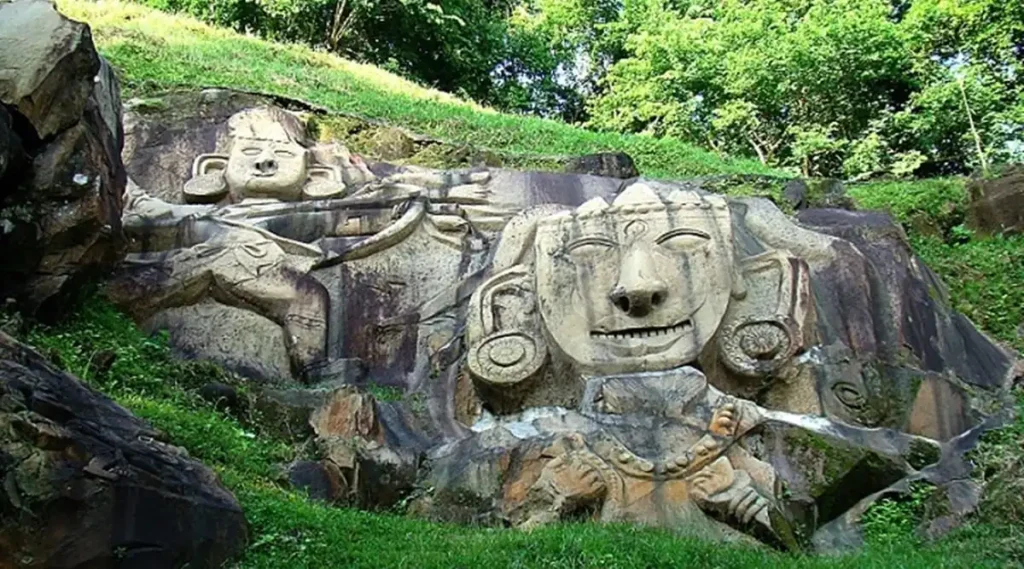
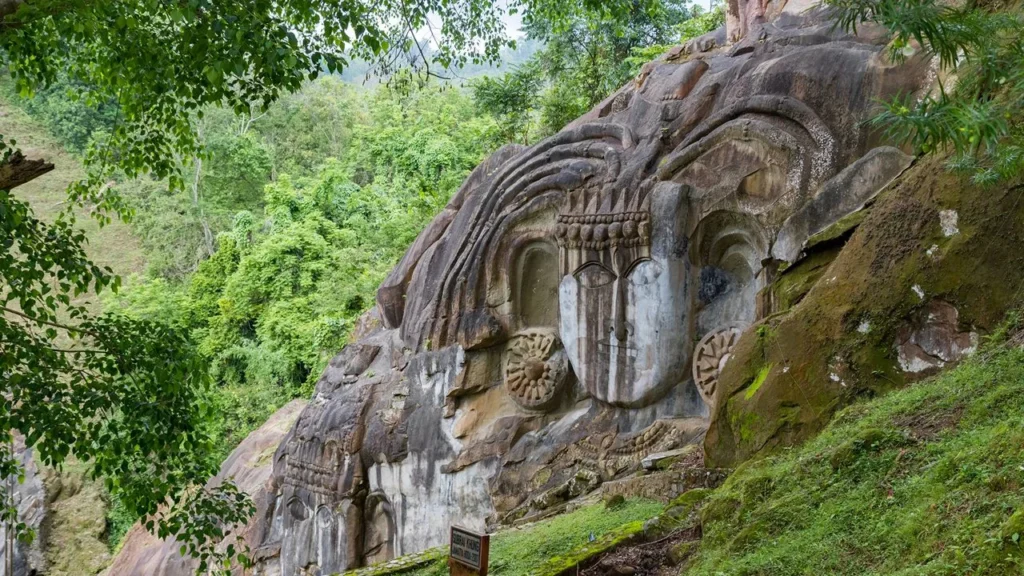
The most iconic sculpture is the massive face of Lord Shiva. It is known as the Unakotiswara Kal Bhairava. People believe that they are their goddesses, Durga and Ganga. It is flanked by two full-sized female figures. Surrounding it are hundreds of other carvings. That is Ganesha with Nandi bulls, and various other deities and motifs. These are all shown in a style that blends tribal warmth with classical symbolism.
The most popular tale tells of Lord Shiva travelling to Kashi with a crew of one crore gods and goddesses. They stopped to rest at this hill. And Shiva instructed them to wake before dawn to continue their journey. When morning came, only Shiva rose. In his rage, he cursed the others to turn into stone. This hill became home to those stone figures, Unakoti.
Moreover, another version attributes the carvings to a master sculptor named Kallu Kumhar. Which is he was tasked with creating one crore images of gods in a single night to earn a place among them. He fell short by one and thus remained mortal.
What is the Real Story of Unakoti?
While the legends are fascinating, the real story of North East Unakoti remains elusive. Scholars suggest that the site may have been a Shaivite pilgrimage centre. The style of the carvings was bold and often asymmetrical. It suggests a blend of tribal and classical influences. Even hinting at a blended devotional culture that thrived in isolation.
Unakoti is also believed to have been a sacred site for local tribes. Long before it was absorbed into mainstream Hindu worship. The absence of inscriptions and written records makes it difficult to trace its exact origins. But perhaps that is part of its charm. This is not a place that offers easy answers. It invites you to stand before its silent faces. And this is why Unakoti is famous for. You can feel the weight of centuries pressing through the liveworts and mist.
Is Unakoti Worth Visiting?
Absolutely. If you are a traveller who seeks more than just checklists and photo ops. Unakoti is not for the hurried tourist. It is for the wanderers. If you are the one who finds beauty in decay and meaning in mystery.
Visiting Unakoti is a sensory experience. The path to the site winds through dense forest. You will get alive with birdsong and the scent of wet earth. As you follow the stone steps and the first massive face of Shiva comes into view. That is a moment of awe that no photograph can capture. The carvings are not roped off or behind glass. You know, they are part of the landscape, and wild. Moreover, Unakoti offers a rare view into a form of sacred art that is both monumental and beautiful.
Travel Tips and Recommendations for Unakoti
Are you planning a trip to Unakoti? Then start from Kailashahar. It is just 10 km away. Or Kumarghat too. This can be accessed from Agartala by road and rail. Even the air, too. Visit between October and March for pleasant weather and views. It is best to avoid the slippery monsoon season.
Must wear trekking shoes and carry essentials, as facilities are limited there.. If possible, time your visit with the Ashokastami Mela in April for a vibrant cultural experience. Above all, respect the site’s heritage. That is very important. And most importantly, don’t touch the carvings or litter there.
summing up
As I said earlier, Unakoti is more than a destination. You know, it is a dialogue between stone and spirit. In a world obsessed with speed and spectacle. Unakoti asks you to slow down and look closely to wonder. It is a place where history and legend blur. Where every moss-covered face tells a story you can’t quite interpret but feel in your bones.
To visit Unakoti is to step into a forgotten chapter of India’s spiritual and artistic heritage. It is to walk among gods turned to stone, to hear the echo of a sculptor’s hustle in the rustle of leaves. It makes you feel the presence of something ancient and enduring. And these all mysterious stories make sense, why Unakoti is famous in Tripura or in India.
So yes, Unakoti is worth visiting for you. Not just for what you will see, but for what you will feel. Then why wait? Plan your trip and make unforgettable memories!!!